How it goes
Source first, then containment, then removal
Mold needs moisture to grow, and the EPA puts it plainly: the key to mold control is moisture control. If the mold gets cleaned and the leak stays, the EPA says the mold will most likely come back. That is why the first thing we look for is the water.
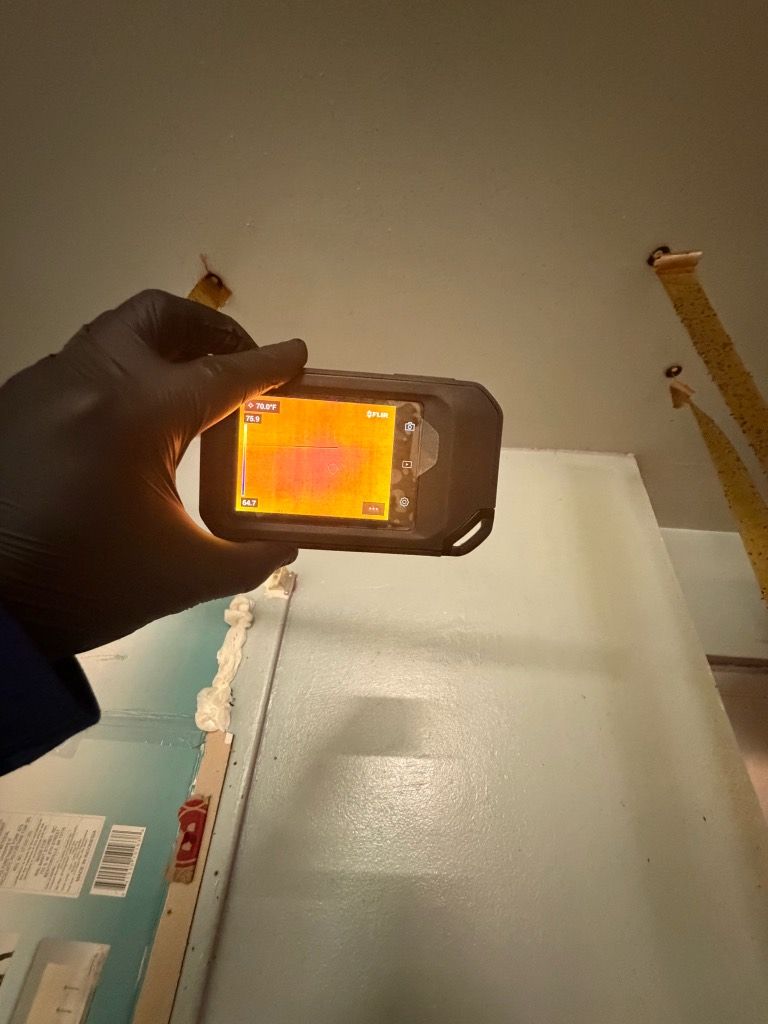
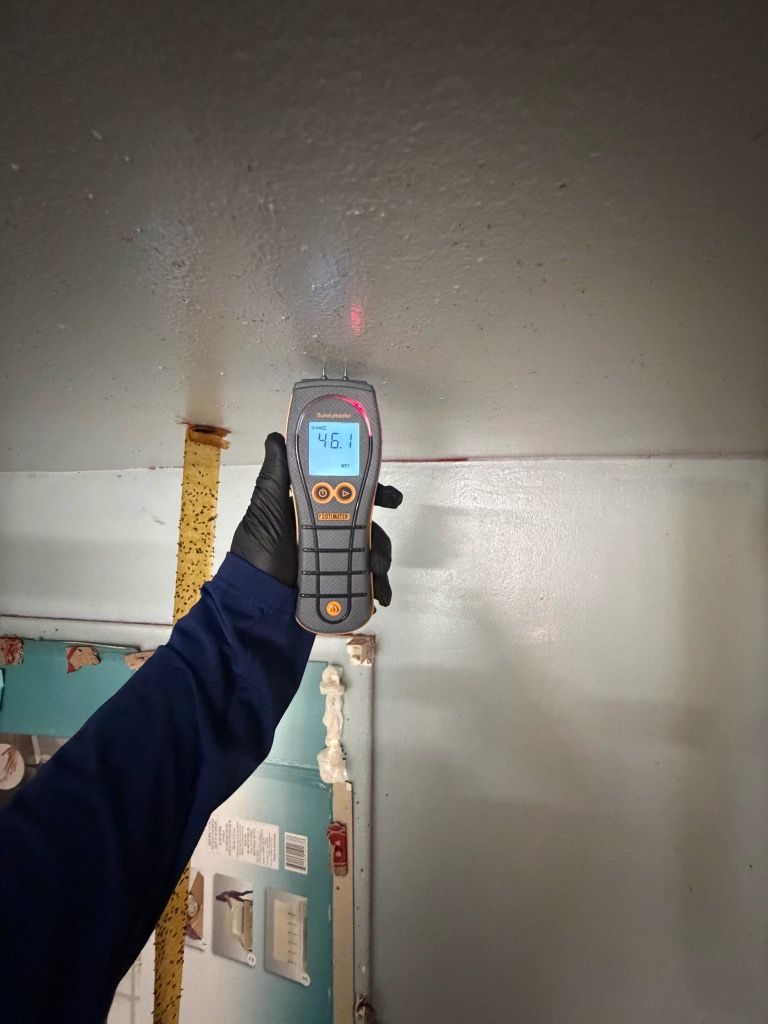
Thermal camera and moisture meter to map where the water is and where it came from. If the source needs a plumber or a roofer, you hear it before removal starts.
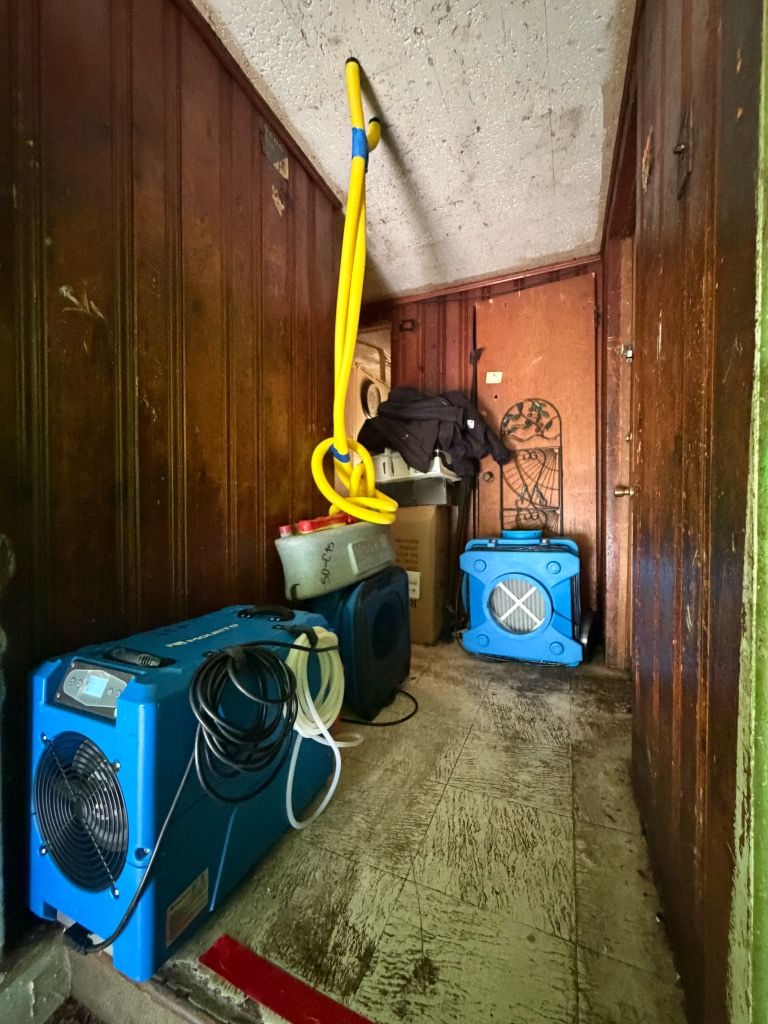
The work area is closed off with plastic sheeting and the air runs through HEPA filters, so spores stay out of the rest of the house. Moldy porous materials, like drywall, insulation and carpet, come out.
The structure is dried and measured until it reads dry, and every stage goes in the file with dated photos.
A musty smell can come from a leak you cannot see.
Roof, plumbing and HVAC. Nothing to sign.
Texas, through TDLR, and Florida, through DBPR, license mold assessment and mold remediation as separate trades, and in both states the law, with narrow exceptions, keeps the same professional from assessing and remediating the same job. Illinois does not license mold work at the state level. A state registration for mold remediation companies is waiting on rules from the Illinois Department of Public Health.
When you smell a musty odor, TDLR, the Texas agency that licenses mold work, suggests checking hidden areas: plumbing access panels, crawl spaces, behind mirrors and furniture, attics, closets and cabinets.
TDLR says bleach on drywall is not a permanent fix if the source of the mold stays in place, and that painting over mold is not a fix either. The EPA adds: clean the mold and dry the surface before painting.
The EPA says that when mold is visible, sampling is in most cases unnecessary. TDLR adds that finding and stopping the moisture matters more than knowing the species, because otherwise the problem returns.
Common questions
What people ask about mold
Can I clean a small patch myself?
The EPA says that if the moldy area is less than about 10 square feet, roughly a 3 by 3 foot patch, in most cases you can handle it yourself. Fix the water problem too, or the mold comes back. For more than 10 square feet or a lot of water damage, the EPA points to its guide Mold Remediation in Schools and Commercial Buildings.
Should I keep running the AC?
Not if you know or suspect the system has mold in it. The EPA warns that running a contaminated HVAC system can spread mold through the building. Tell us on the call; the HVAC is one of the things the free inspection checks.
Do I have to leave the house?
It depends on where the mold is and how big the area is, and we tell you once we have seen it. The work area is closed off from the rest of the house. If you have health concerns, the EPA says to consult a health professional before cleanup starts.
Does my insurance cover mold?
Only your policy and your insurer can answer that, so ask your insurer. What we hand you is the file, with dated photos and moisture readings from every stage. We do not file, negotiate or adjust claims.
Mold keeps growing while the wall stays wet.
The first step is finding the water. Call now, or send the details and we call you.
(888) 844-7862 Report the damage